Species Profile & Global Industrial Scale
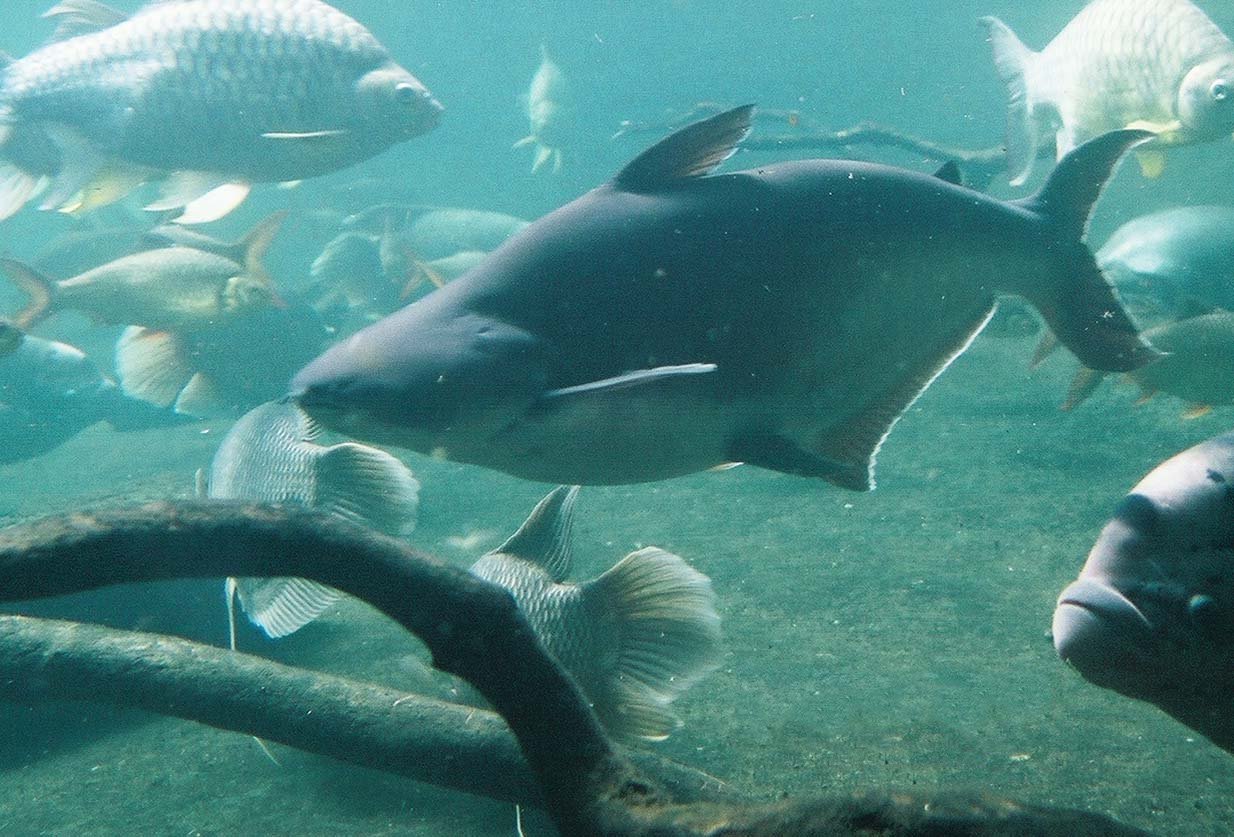
The Striped Catfish (Pangasianodon hypophthalmus, known internationally as Pangasius, Tra, or Basa) is one of the most prolific aquaculture success stories in agricultural history. Originating in the Mekong Delta basin, Pangasius yields astonishing biomass outputs (250 to 450 metric tons per hectare per crop cycle) due to its unique physiological and anatomical advantages:
- Modified Swim Bladder Respiration: Pangasius possess a vascularized, honeycomb-structured swim bladder connected to the pneumatic duct. This functions as an efficient lung, allowing fish to gulp atmospheric air and survive in stagnant, low-oxygen waters (<1.5 mg/L DO).
- High-Density Aggregation: Unlike territorial or aggressive African catfish, Pangasius are schooling, peaceful omnivores that thrive under dense schooling conditions without biting or shooting.
- Global Fillet Dominance: Mild, non-fishy flavor, tender flake structure, complete absence of intramuscular bones, and high processing yields (33%–38% skinless, boneless fillets).
Deep Pond Engineering & Hydrology
Traditional aquaculture ponds are 1.0m to 1.5m deep. In sharp contrast, Pangasius culture requires massive deep ponds to achieve industrial packing densities:
- Pond Depth Architecture: Excavate ponds to a water depth of 3.5m to 4.5m with broad dykes (3m–4m crest width) capable of handling tractor and feed cart traffic. A single 1-hectare pond at 4m depth contains 40,000 m³ of water, buffering thermal spikes and diluting waste.
- Tidal & Axial Pumping Exchange: Located along major rivers, ponds utilize heavy 500mm axial flow pump stations. 20% to 35% of total pond water is exchanged daily during peak low tides, purging settled feces and refreshing water chemistry without costly biofilters.
- Dyke Core Integrity: Due to extreme hydraulic pressures of a 4-meter water column, dyke slopes must be constructed at 1.5:1 to 2:1 with compacted clay puddle trenches and rip-rap stone or vetiver grass stabilization on dyke faces to prevent erosion.
Dietary Xanthophyll Control for Pure White Flesh
The White Fillet Market Premium
International retail buyers in Europe and the United States grade Pangasius fillets strictly by color: White > Light Pink > Light Yellow > Yellow. Fillets showing yellow or cream discoloration face severe price penalties of up to 40% or outright shipment rejection. Color is governed entirely by feed ingredient selection.
Feed Formulation Rules for White Flesh
- Zero Yellow Corn / Maize: Yellow corn is rich in zeaxanthin and lutein carotenoids, which deposit directly into adipose and muscle tissue. Replace corn entirely with broken rice, cassava starch, and wheat flour.
- Defatted Rice Bran & Soybean Meal: Use solvent-extracted defatted rice bran (<1.5% fat) and dehulled soybean meal (48% CP) as primary protein and energy foundations.
- Pigment Free Binders: Prohibit corn gluten meal, marigold petal meal, and spirulina.
- Target Nutrition: 28%–30% Crude Protein, 4%–6% Crude Fat, FCR 1.55 to 1.70 using extruded floating pellets that minimize starch leached into the water column.
Harvesting, Bleeding & Processing Standards
- Depuration Fast: Withhold feed for 48 to 72 hours before harvesting to evacuate gut contents and clear any algae-derived geosmin off-flavors.
- Well-Boat River Transport: Fish are netted and loaded directly into slotted wooden river barges ("well-boats") where river water flows continuously through the hull during transit to the processing factory, eliminating suffocating transport stress.
- Immediate Slitting & Bleeding: Upon factory arrival, live fish are electrically stunned and immediately slit across the gill artery and ventral throat. Carcasses are submerged in chilled water (4°C–6°C) for 15 minutes. Complete exsanguination (blood evacuation) is critical to prevent pink blood spotting in the finished fillet.
- Skinning & Trimming: High-speed mechanical Baader skinners remove the skin, followed by manual trimming to excise the fatty red muscle line along the lateral flank, leaving pure white muscle.